I’ve had a simplex node up and running pretty much hands off for a long time. Pi3, modified CM108, Retevis RT85. Lately, I believe there has been some weak simplex traffic on the channel I utilize and it’s keying up the node. I did of course initially set up ctcss on the Radio but after some testing it doesn’t appear to be working. I have gone through the setup many, many times on the node radio and it will kerchunk the node without any ctcss set on any of my other test radios - on low power, several wavelengths away from the node antenna.
It’s been a while but I don’t think I’m using the usbradio driver, I only have usbradio.conf.xxx in /etc/asterisk
Can I use simpleusb to handle and reject non-ctcss signals? It would be SO much easier to do this at a radio level but that just doesn’t seem to play nice.
Thanks so much for any help. I really don’t want to leave this connected any other nodes until I get it sorted.
You didn’t mention any specific troubleshooting you’ve done so some guessing here, but that RT-85 is in service in a ton of these nodes and works great. I as well have two on the air and have never had any issue with CTCSS/DPL tone decoding. All of that is buried in the one chip in the radio, it seems very unlikely you are dealing with a hardware issue.
Changing from simple USB to USBradio seems like unnecessary work (it does take some configuration and you have to watch not having discriminator audio out of the HT). I’d just disconnect the radio and spend a few more minutes making sure the CTCSS RECEIVE is working. If not, just change the radio…they are literally like $10-15.
Edit: I re-read your post 3 times and I think you are currently using USBradio and asking more about using SimpleUSB. I’ve personally never used a HT with USBradio but to do PL decode with USBradio you need raw audio (discriminator) which you can’t get from that radio. Maybe spend some time online looking at a few of the setup guides that can help you through that as well.
Did much more testing and have some more info. The node radio ctcss is eliminating the audio but the carrier is still being sent through which results in a kerchunk.
I went through all the various setting options for ctcss in simpleusb and still can’t figure out how to keep non-ctcss transmissions from keying up the node. I have no tone/squelch settings in the Retevis which I think would solve the problem.
I feel like there’s no chance of getting this working unless I handle the ctcss filtering at the allstar software level. I’m not even sure that’s possible.
Not having seem your setup I’m curious where you are getting RX audio from. Also, using simpleusb is a much better choice as it lets the radio do COS and PL decode. I read somewhere that these radios might put DC voltage on the speaker when valid signal (COS + PL) is present. This is a very easy way to detect a signal. I did this on a couple of Motorola MCS2000 radios I made as link nodes for friends. And also I let the radio do de-emphasis and pre-emphasis.
I also thought about the voltage for the carrier detect, but the original post says it was a modified fob, which would just need a regular COS signal to activate. In that configuration the radio does need to do CTCSS. So simple USB is definitely the right way to deal with the signals on the node, I would just try to divide and conquer by disconnecting the radio. Does the radio do CTCSS receive like it should? (Audio when signal has valid ctcss and no audio when it does not. If niether of those happen, change radio.
Maybe you could clarify exactly what type of fob with the CM 108 chip you are using? David‘s website on allscan is one of the best but he does have a lot of products that some act differently so it’s hard to give any advice without knowing exactly the wiring at the end of the day the radio when it gets a valid CTCSS signal needs to change the state of the COS line that goes to the fob. my guess is that you are getting a signal to the fob from the radio that is just carrier squelch, not the one that is for a valid ctcss but that is a GUESS
About 2/3 down the long page you’ll see “Installation of a COS Line in an RT85 (Optional)” but tragically it’s a broken link!
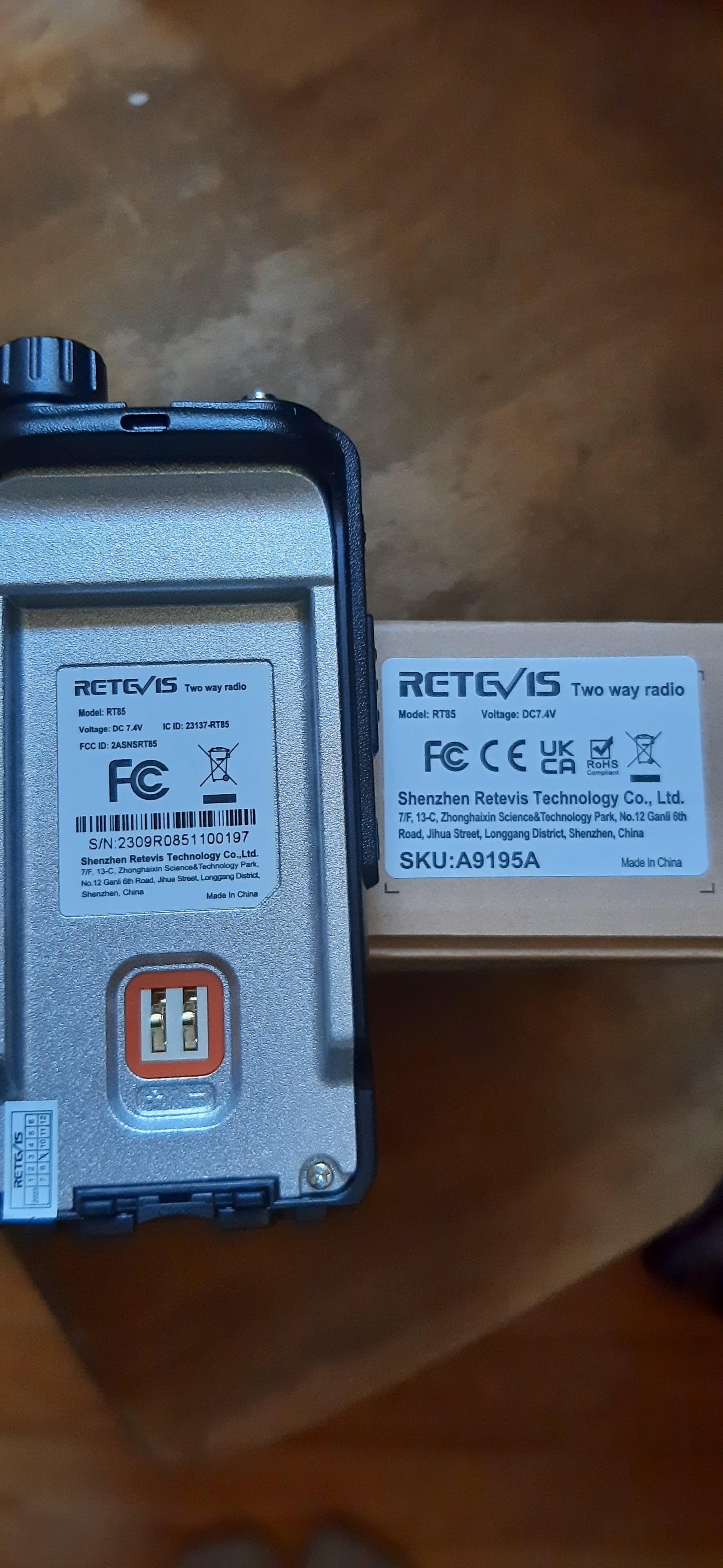
I think the radio is filtering out the non-ctcss txs and not sending audio to the speaker but it’s tipping the COS line to the CM-108. It sounds like pulling the COS from the speaker voltage might be the ticket for me. The caveat is that I’ve read this only works on the newer RT-85s (maybe 2-3 y/o)? I have this bnib. The 2309 in the serial number gives me hope but I’d like to get some confirmation before I open it up. I can’t find any info on how to tap into the speaker and send the voltage through.
As mentioned above, if you want the radio to handle the CTCSS decoding, the signal you need from the radio should only become active when the receive CTCSS is valid. It sounds like yours is reacting to just a carrier. I tried that link and it did not work for me as well. I’m sure the allscan folks can help with a radio interface that will detect audio outside of the radio if that’s where you end up. I never saw where you said exactly what interface you were using, just that it was modified.
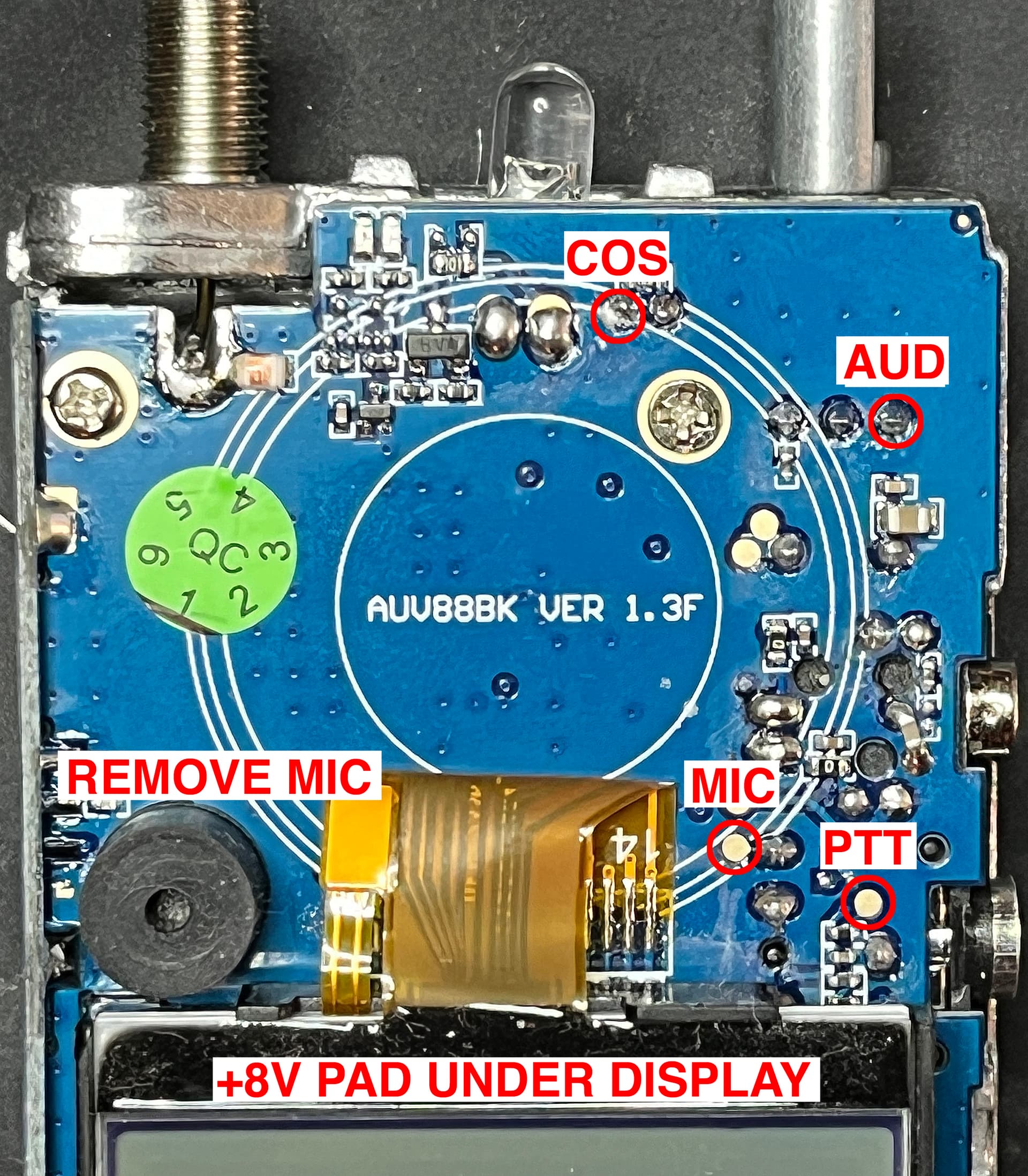
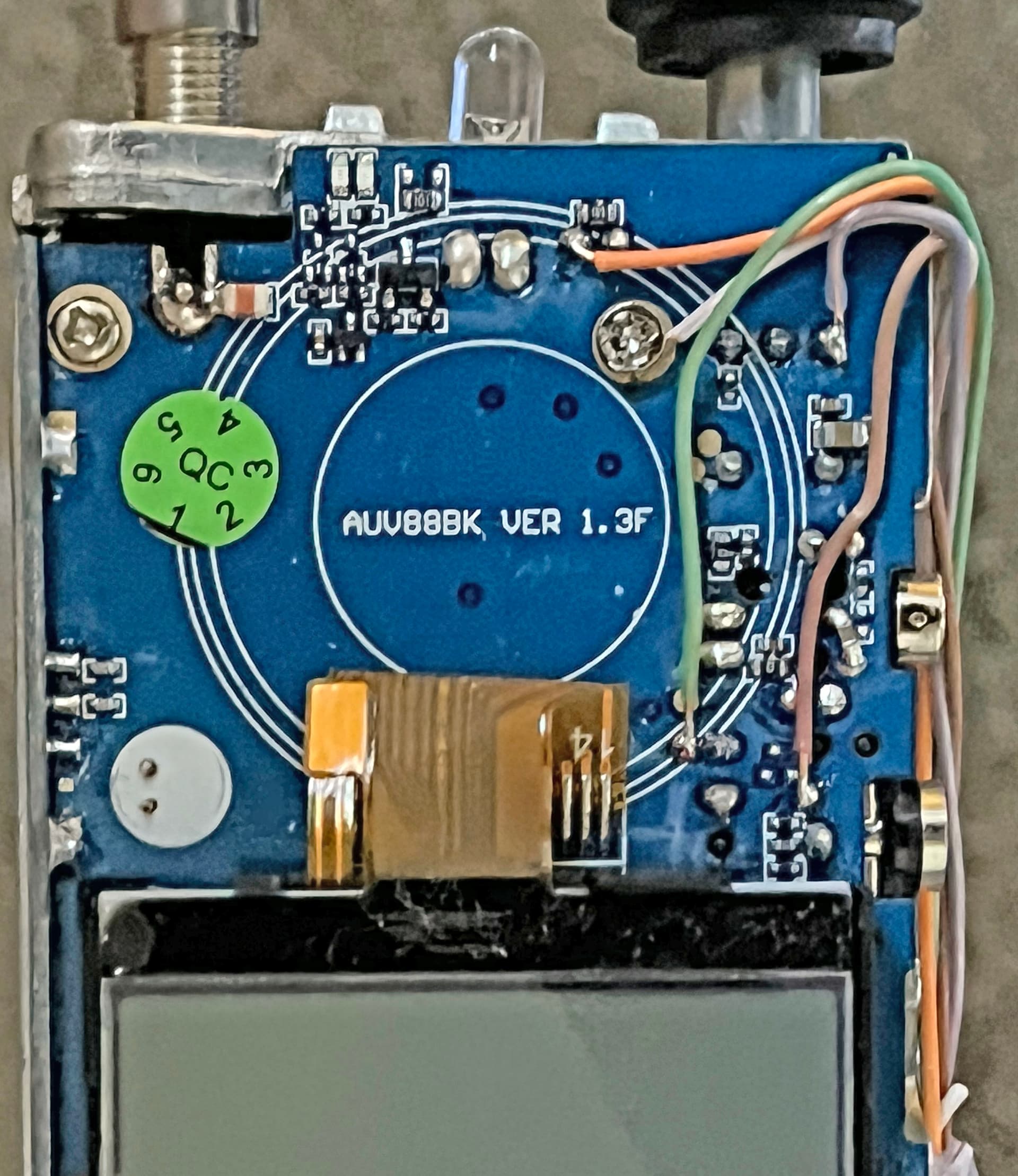
I found a picture of one of my RT-85’s that I modified. The “COS” was found on the back of the board and goes high when the radio gets a valid CTCSS. This has worked for me. WARNING, these radios have different versions and I have no idea what you’ll find in your RT-85.
Just fyi Baofengs and many Radio-on-a-chip radios, when the audio is turned on, has about 3.3 volts on the positive speaker lead but when the ctcss is on but sees no/incorrect tone, this voltage does turn on because the audio is not turned on so that is a good place to grab a cos line. You can filter it with a diode and a decent size cap so you only have the dc.
Another note: i have found that the H3 plus radios have a low freq tone on Tx Even when the tx ctcss and dcs is turned off. Dirty TX AUDIO !
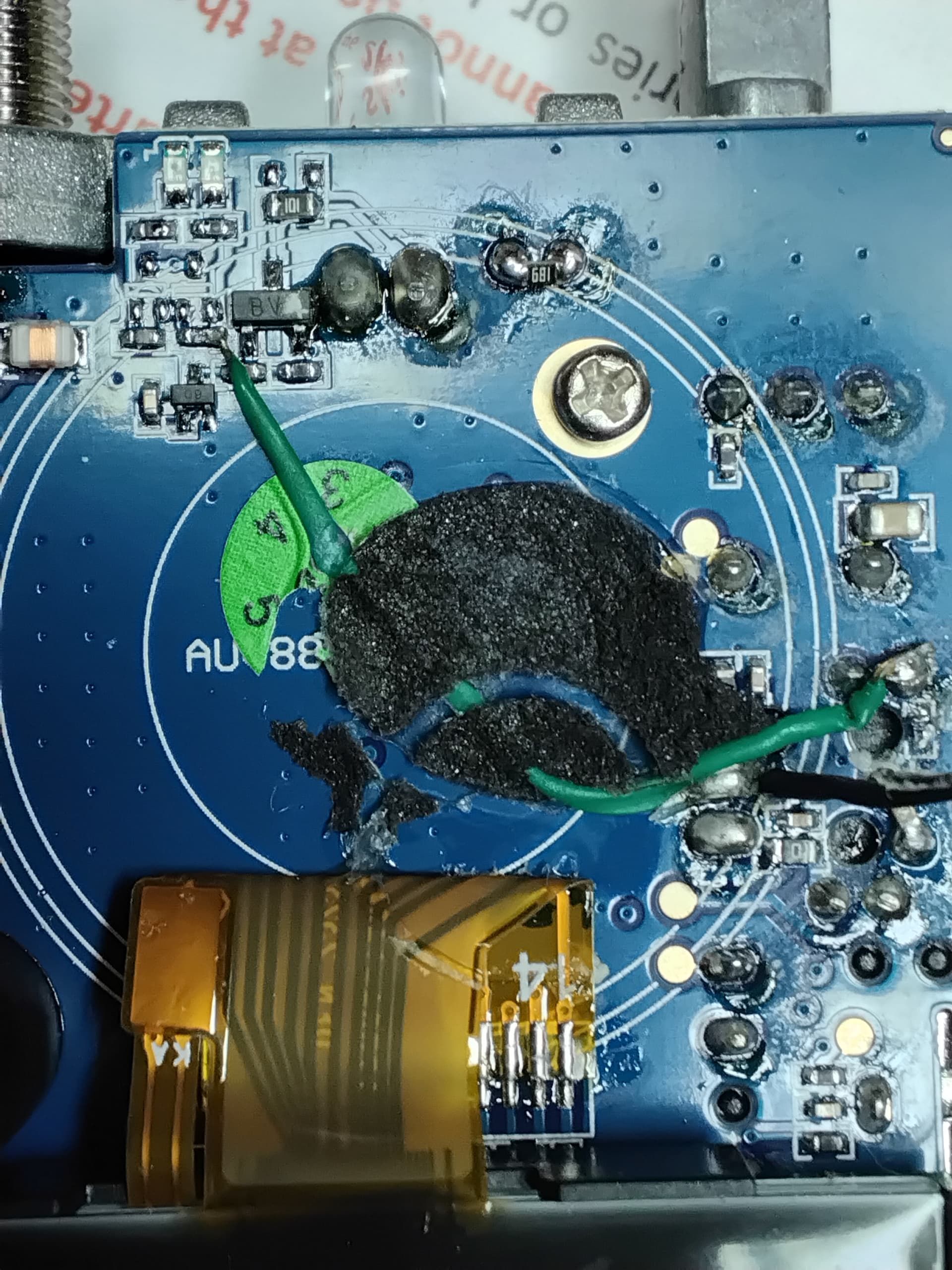
OK, interesting. I pulled the radio out to see what I had. This is where I got my COS. I’ve got 189ohm resistor near where yours is - I can’t tell if your resistor is removed or not.
edit - I scraped back some of that speaker cushion goop or whatever it is and sure enough, I’m version 1.3 , I don’t have the “F”
That’s a version 2 series radio and that may work fine but on the 1.3 the green LED is most definitely ON when the radio is disallowing audio due to the lack of tone.
I’ll wait to see if you remember if that resistor is there or removed. We may have figured it out.
To VA3DMZ, thanks for posting a link to my How-To Guide which has details on how to properly obtain COS AND CTCSS status from an RT85. A quick summary on that,
HT LEDs only show Rx busy status, not CTCSS status ie. there is no HT model I am aware of that will light the LED only when a valid CTCSS tone is present.
The RT85 and many other HT models do provide a highly reliable bias voltage output when the speaker amp is on, which in fact only happens when valid CTCSS state is present. The AllScan URI101 and other URI models have a built-in circuit that detects this, thus enabling high-quality nodes to be built with no mods needed to the HTs.
AllScan URIs have drastically better RFI resistance than a sound fob, and a number of other very handy features, and are only $49 for an fully assembled and tested PCB, or $69 with extruded aluminum case and all needed cables and ferrites included. Sure you can save a few $ with a sound fob and waste hours of time modifying it and trying to fix RFI USB hash noise issues, but hopefully your time is more valuable than that.
VA3DMZ then also later posted a link to a copy of my How-To guide on w4msi .com but the copy there is 2 years out-of-date. Please refer the guide on my site - AllScan - How To - Build a High-Quality Full-Duplex AllStar Node for Under $150 (And if anyone knows w4msi please ask him to remove the unauthorized ancient copy of my guide from his site. He does not seem to have an email address on QRZ or anywhere.)
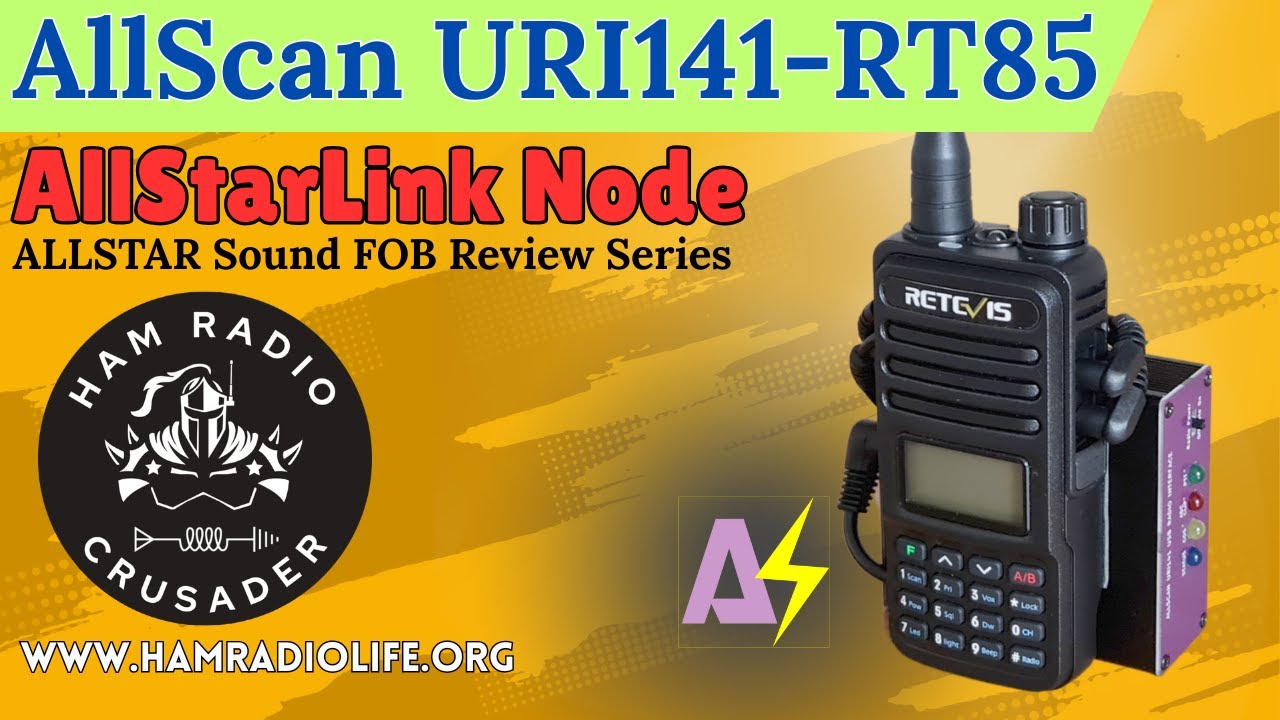
BTW below is a video from Freddie Mac reviewing my URI141-RT85. This is a simple and low-cost node radio module (ie. URI + HT) that is 100% plug & play, 100% USB-powered (no HT battery or charger required), and the sound quality is far better than you will get with a sound fob.
I did not remove that resistor (or whatever it is). Seems easy just to move that wire to where I have it to try it. Your board looks the same to me right there where my COS wire is. I just saw David (allscan) responded as well, I’m sure he’s got more ideas for you to consider as well.
It worked! It was a simple task of swapping one end of the wire. As predicted/mentioned the LED does light up with a non-ctcss carrier but the node doesn’t trip COS now. Beauty.
It took a while to configure/re-tune simpleusb as I had spent a while futzing with software trying to fix a hardware problem. But that's the fun part of the hobby.
What a great feeling to put the time in a figure it out with the help of some awesome people. It’s interesting how I went years without discriminating tone and then some distant simplex comms threw a wrench in the works. But, perfect example of why we have/need ctcss.