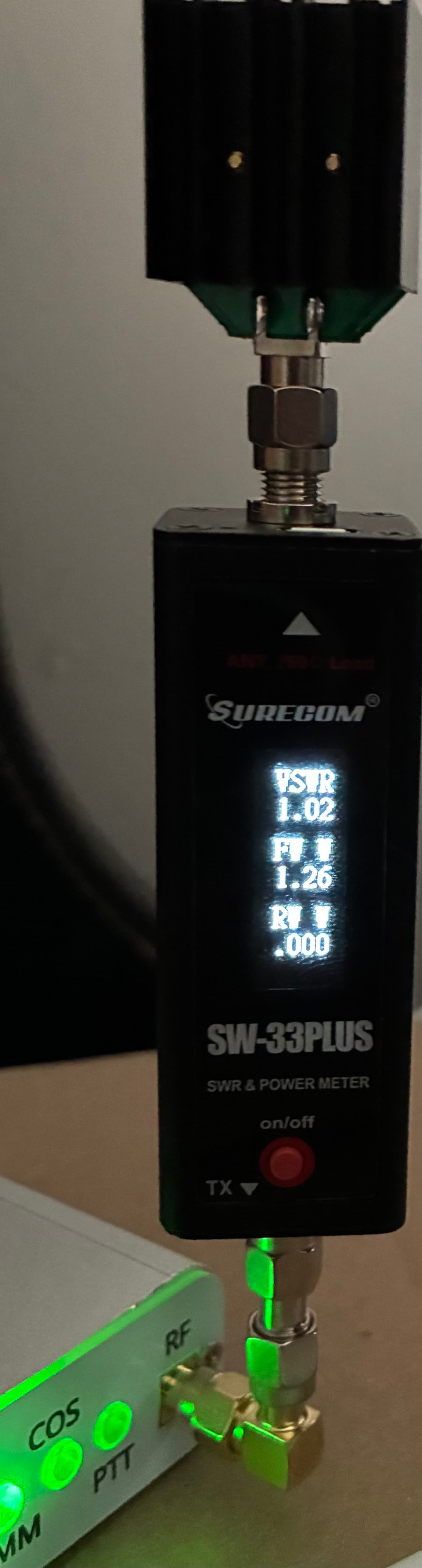
Thank you I'm going to try that.
This case deemphasis enabled seem to make it work less effectively. Be highly dependent on radios on both ends I'm guessing.
This is normally used when the audio source is from the rx discriminator.
Can you post your rpt.conf file as a attachment in a post. Let more eyes see it.
It may be fat finger error or perhaps worse.
De-emphasis and Pre-emphasis have very precise meanings when it comes to radio.
You absolutely must match your deemphasis setting to how you're obtaining the audio from the radio and your preemphasis setting to how you're sending audio back to the radio. If your deemphasis is wrong, DTMF will likely never decode.
Thank you I will give that a read and see if I'm able to comprehend it.
rpt.conf (33.5 KB) Attached.
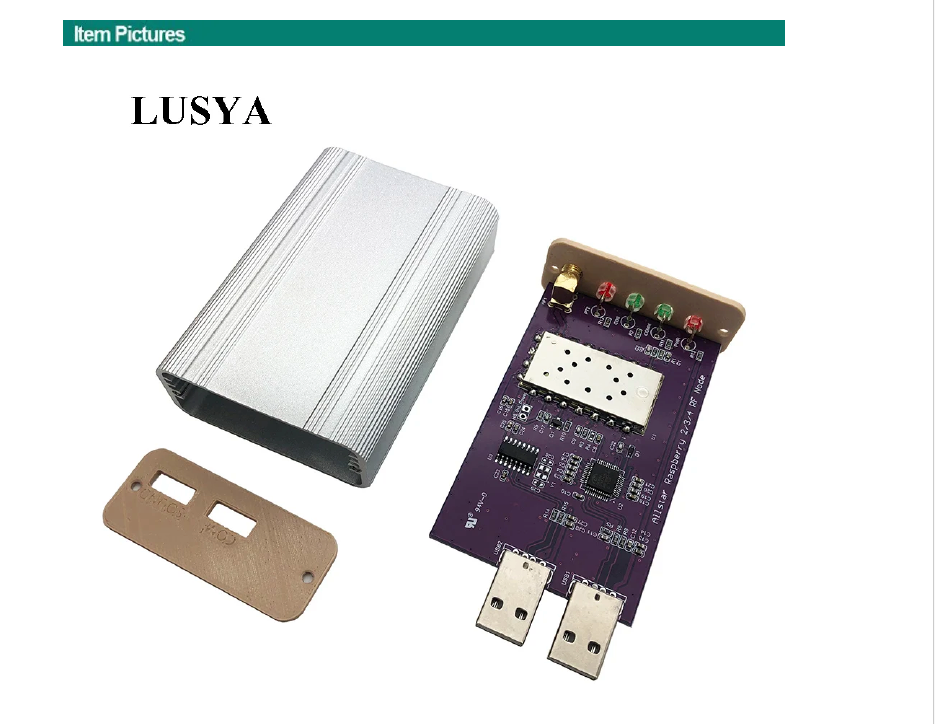
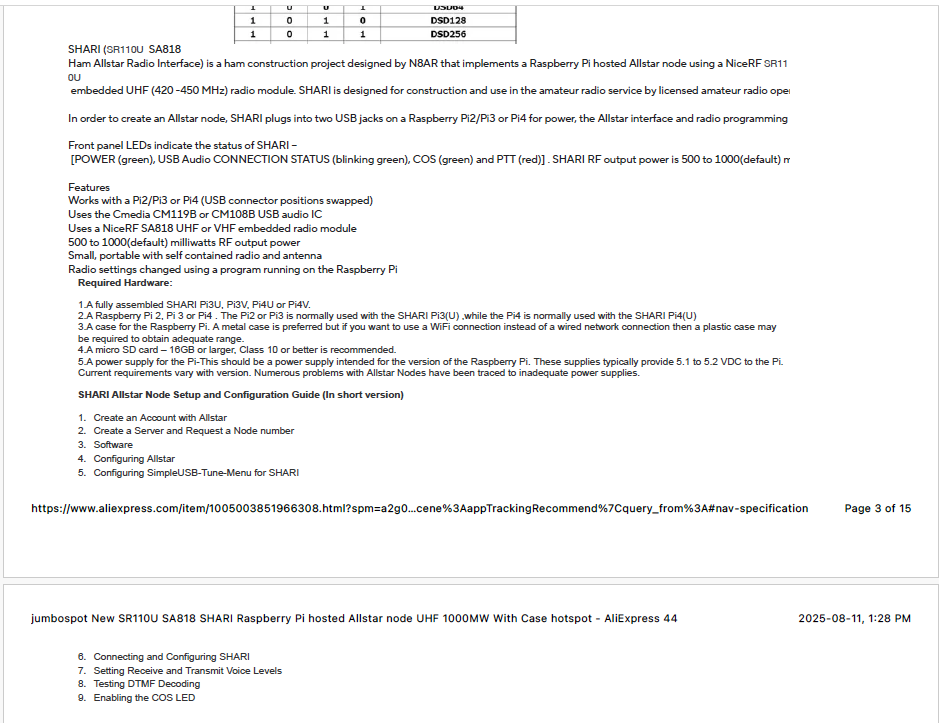
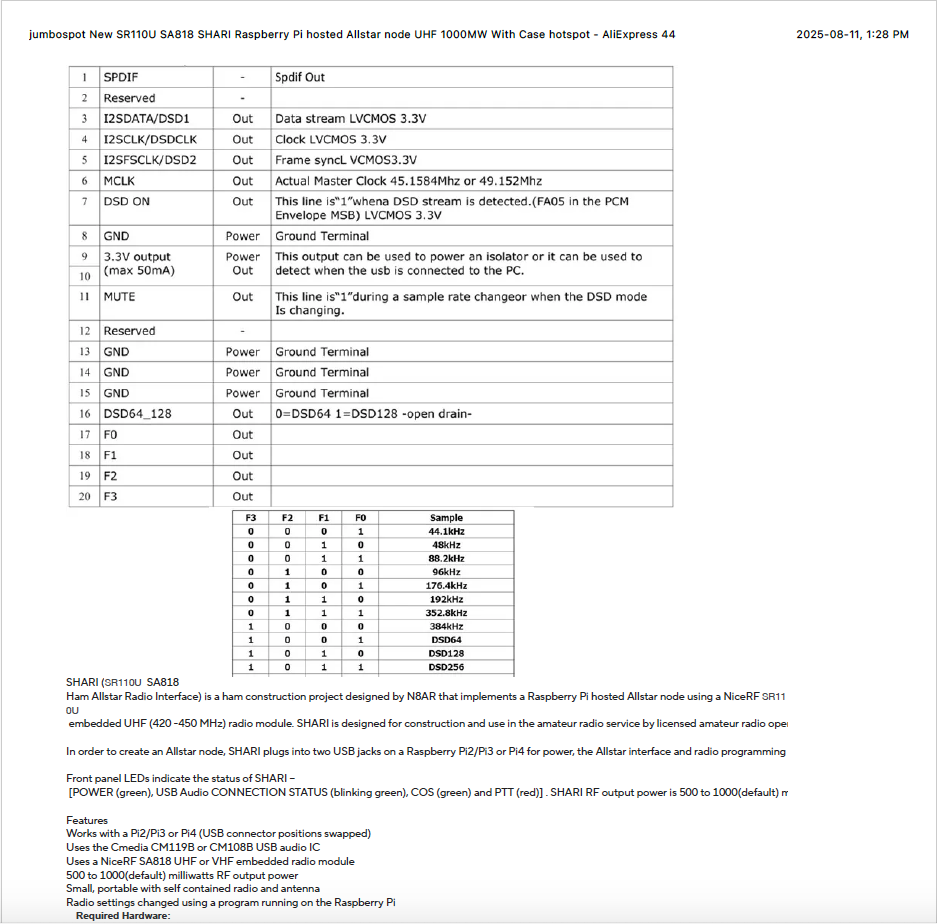
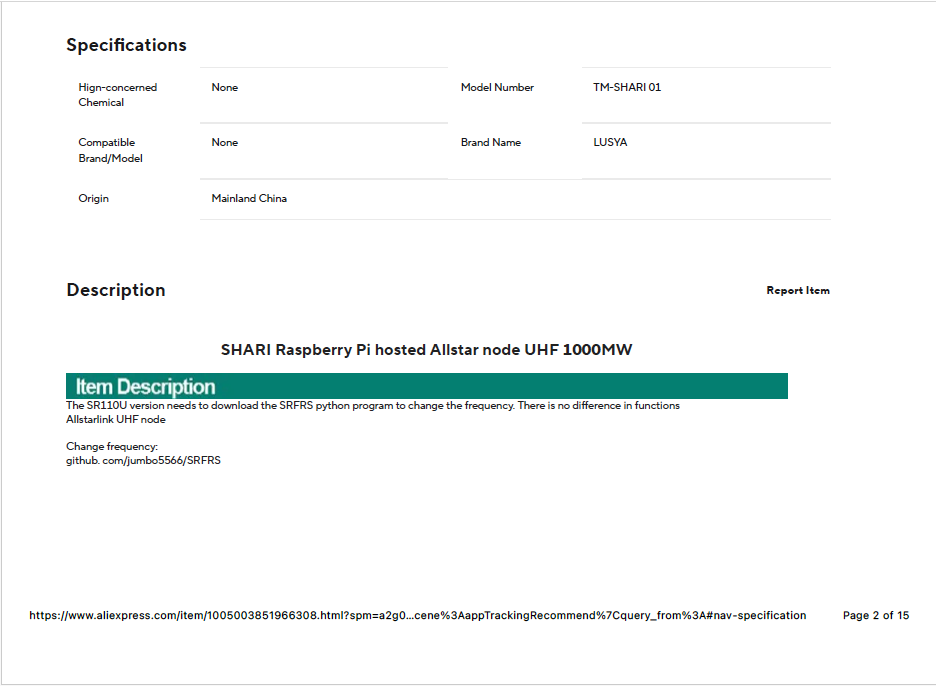
I'm beginning to think it's more Radio settings on the pi side. I don't know very much about this board but it was suggested that I get a pre-assembled one as a first project, its inexpensive, well made and apparently works quite well. In terms of the technical documentation this is really all I have. Plus I have limited technical knowledge when it comes to RF and electronics. This one is on loan until my order arrives:
:
Our automated spam filter, Akismet, has temporarily hidden your post in Enable local DTMF interpritation? for review.
A staff member will review your post soon, and it should appear shortly.
We apologize for the inconvenience.
Well, when you can say that you are able to decode all dtmf digits I suppose we can continue.
Your usb radio interface (uri) does not tell you what type of audio you have.
That is dependent on where in the receiver you get it from.
Guessing you are using a pre-fab kit with cable and you probably do not know.
Being what it is, you are going to have to trial and error using
deemphasis = yes and no adjusting each time your audio settings until you have something working. Do this each time per manual spec.
For when you change this setting, the audio levels will change dramatically. It needs to be setup again on each change using this trial and error.
Not sure if there’s a ton of savings with those chinese SHARI knockoffs, considering the level of support you get from the real thing, kitsforhams.com
Just my 2 cents
ps. Looking it up, a real original SHARI (assembled) was only $109, so it looks like the answer is no…
Well, this was $49 and prebuilt. I was not told that kits for hands sold preassembled units. The exchange, tax, duty and shipping from the US to Canada on even the kit was somewhat cost prohibited on my disability budget and I wasn’t sure I was up to building something from scratch at this point but yes, I do agree.
That is cheaper to be sure but I was quoting the assembled version, not the kit, fyi. I was referencing vs. a random (chinese) one I saw on a quick fleabay search. All good!
Well, to satisfy my curiosity, I requested a quote by email shortly after replying to you. I wasn’t aware that you could get a fully assembled unit beforehand, so I really appreciate that insight—very helpful!
The exchange rate adds up to $145 CAD, so I’m curious to see how the final cost breaks down once shipping, taxes, and duty are factored in.
This board was featured on the Tech Minds YouTube channel, and he had a pretty positive take on it, so I’m optimistic:
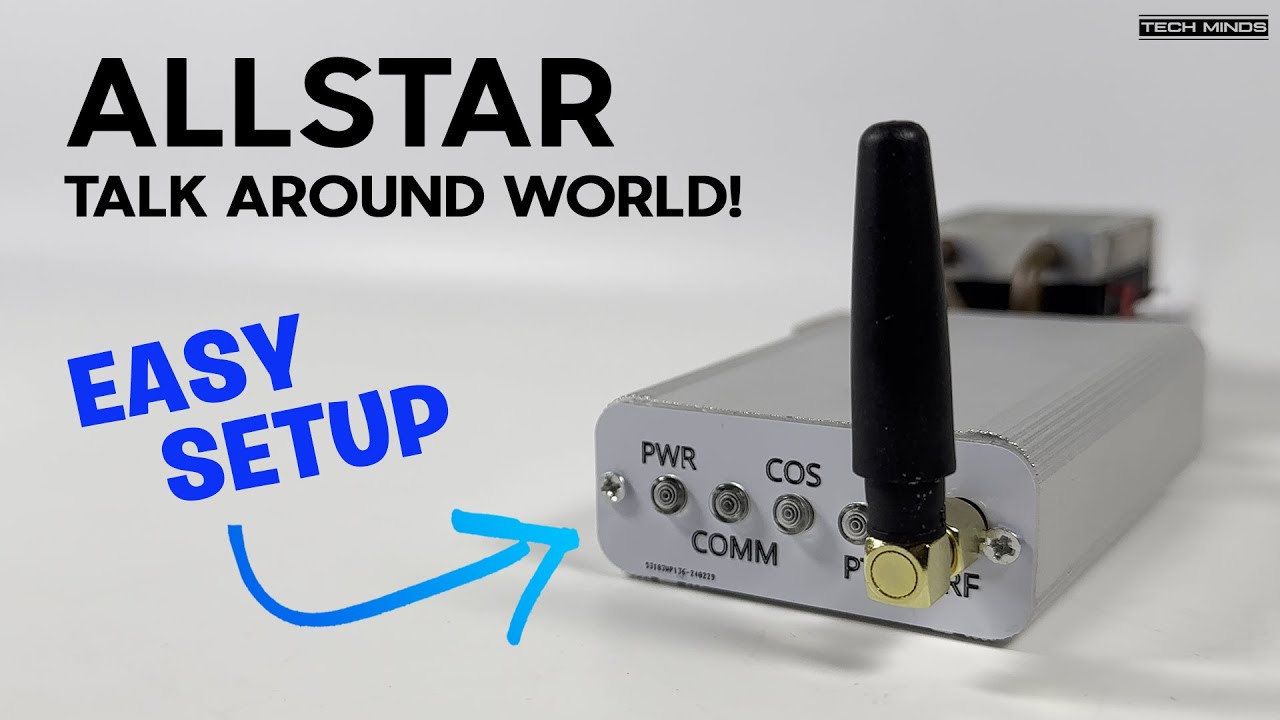
At the moment, the only issue I’m running into is with DTMF. It’s increasingly looking like a radio configuration problem. If I manually send three tones or characters, it seems to work fine. But when I try to send an auto sequence, the results are hit and miss—definitely something I need to dig into. And I appreciate everyone’s help!
I was surprised at how well this worked across the street and around the corner beside another concrete building when it is in my apartment at the back of another building.